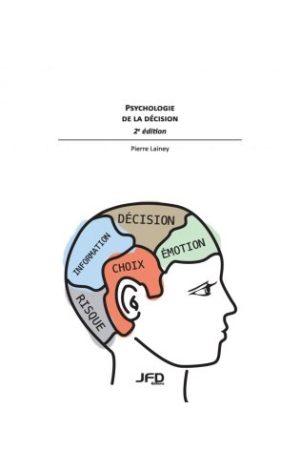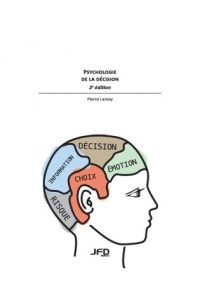
Deciding is a daily activity that we do almost automatically without question. Some decisions call for deeper reflection, which can be supported by various analytical tools. All too often, however, we forget that the main decision-making tool we need to know more about is the human brain. Far from being infallible, the brain can lead individuals to make choices that are not to their advantage, without them even realizing it. The more we know about these inherent failings in the decision-making process, the easier it will be to guard against them and make better decisions. The aim of this book is to explain the cognitive, affective and collective mechanisms inherent in the decision-making process, which comprises five stages: framing the problem, gathering information, generating options, choosing and learning from experience. Each of these stages is analyzed in terms of its constituent elements, with the aim of highlighting both the complexity and the challenges inherent in the decision-making process. The context of the decision-maker and the constraints this context imposes, collective decision-making, uncertainty and risk, the role of emotions and intuition in decision-making, and ethics are also addressed. The aim of this book is not to be theoretically exhaustive, but rather to provide the concrete foundations on which decision-makers can make better decisions.
Pierre Lainey, DBA, MBA, Adm.A., Fellow C.M.C., CRHA is Senior Lecturer in Management at HEC Montréal, where he teaches decision-making. Mr. Lainey has worked for twenty-five years as a manager and organizational development consultant. His mandates have led him to work in public and private organizations in Quebec, Ontario and the United States. A psychologist by training, Mr. Lainey holds an MBA and is a Fellow of the Canadian Association of Management Consultants (C.M.C.). He is a Certified Human Resources Professional of the Ordre des conseillers en ressources humaines du Québec. As a consultant, he has worked for many years with executives and managers in their efforts to improve decision-making processes within their organizations. He provides training on this subject at HEC Montréal's École des dirigeants, and is a frequent speaker at conferences on the subject. He has published seven books on political skills, leadership and supervision. He received HEC Montréal's award for excellence in pedagogy in 2008.